
Motorcycle Jacket Fit: 6 Checks to Make Before You Ride
The Right Motorcycle Jacket Should Fit You on the Bike, Not Just in the Mirror
You found a motorcycle jacket you like. It looks great, feels comfortable, and seems to be the right size.
But there's one important question:
Does it still fit properly when you're actually riding?
Motorcycle jackets aren't designed quite like everyday clothing. They're engineered to accommodate riding positions, help keep protective components where they belong, and allow freedom of movement without excessive looseness.
A jacket that feels perfect while standing in front of a mirror might behave very differently when you're reaching for the handlebars.
Before deciding whether your next motorcycle jacket fits correctly, try these six simple checks.
1. Start With the Riding Position
The first mistake many riders make is judging fit entirely while standing.
Motorcycle jackets are designed to accommodate the forward reach and bent-arm position of riding.
Put on your jacket, zip it completely, and sit on your stationary motorcycle with the engine off.
Reach naturally for the handlebars.
Can you move comfortably? Does the material pull excessively across your shoulders or chest? Does the jacket ride too far up your back?
A jacket may feel slightly different when standing than when seated. What matters most is how it performs in your normal riding position.
2. Check Where the Armor Sits
Protective armor is an important component of modern motorcycle apparel, but positioning matters.
With the jacket fully fastened, check the shoulder and elbow protectors.
The shoulder armor should remain centered over the shoulder area. Elbow protectors should cover the elbow when your arms are bent naturally toward the handlebars.
Try gently moving the sleeves.
If the protectors shift significantly away from the areas they're intended to cover, the jacket may be too loose or improperly adjusted.
A protective jacket should fit securely enough to help keep its armor correctly positioned.
3. Don't Confuse Comfortable With Loose
Many people purchase everyday jackets with extra room for comfort.
Motorcycle jackets require a different approach.
Excess fabric around the arms and torso can flap in the wind and allow protective components to move unnecessarily.
On the other hand, a jacket that's excessively tight can restrict movement and become uncomfortable during longer rides.
Look for a secure, close fit that allows you to breathe normally and operate your motorcycle without restriction.
The ideal balance is snug enough to stay in place, but comfortable enough to ride naturally.
4. Use the Jacket's Adjustment Features
A good motorcycle jacket often offers more adjustability than riders realize.
Waist adjusters, sleeve straps, and adjustable cuffs help fine-tune how the garment sits against your body.
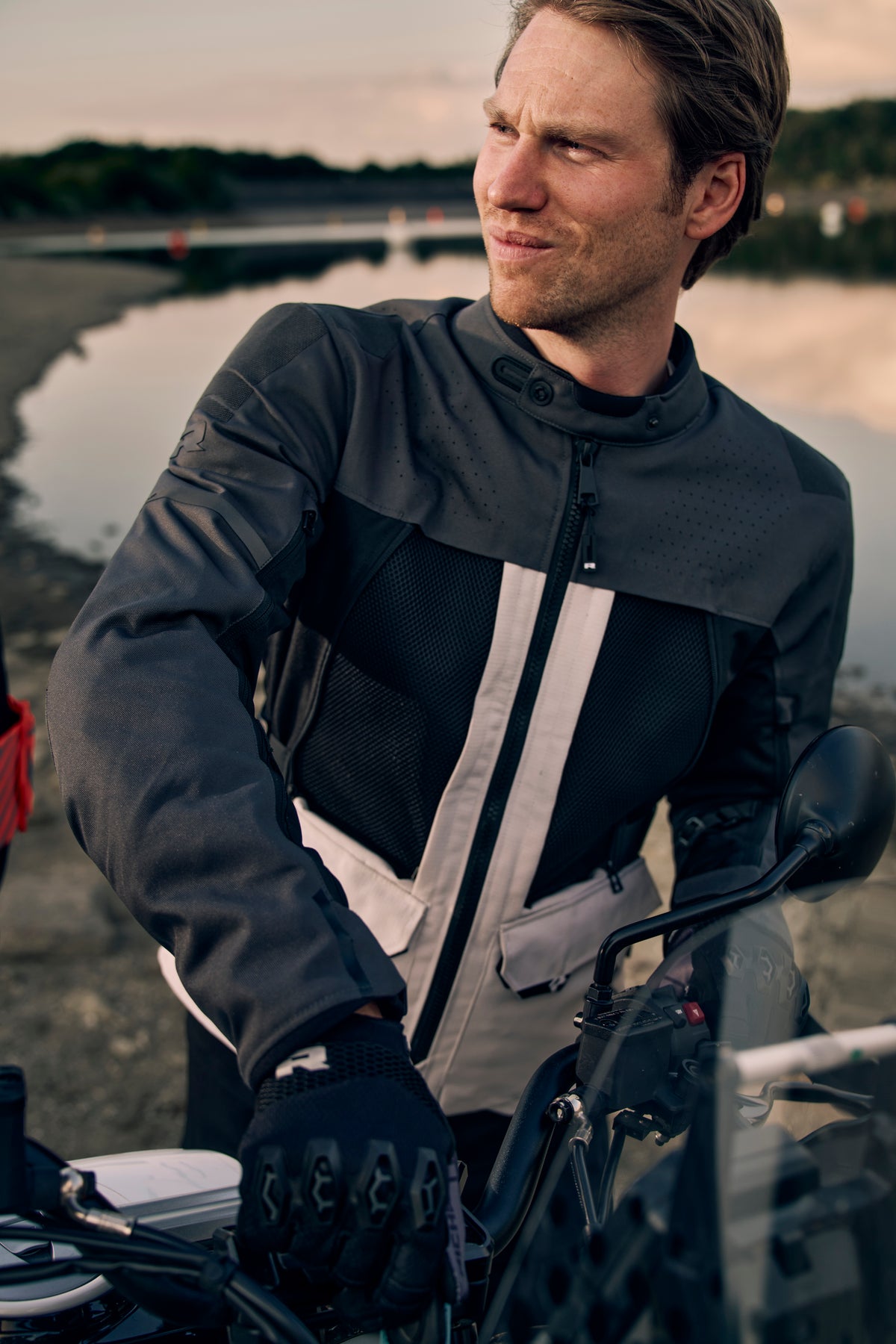
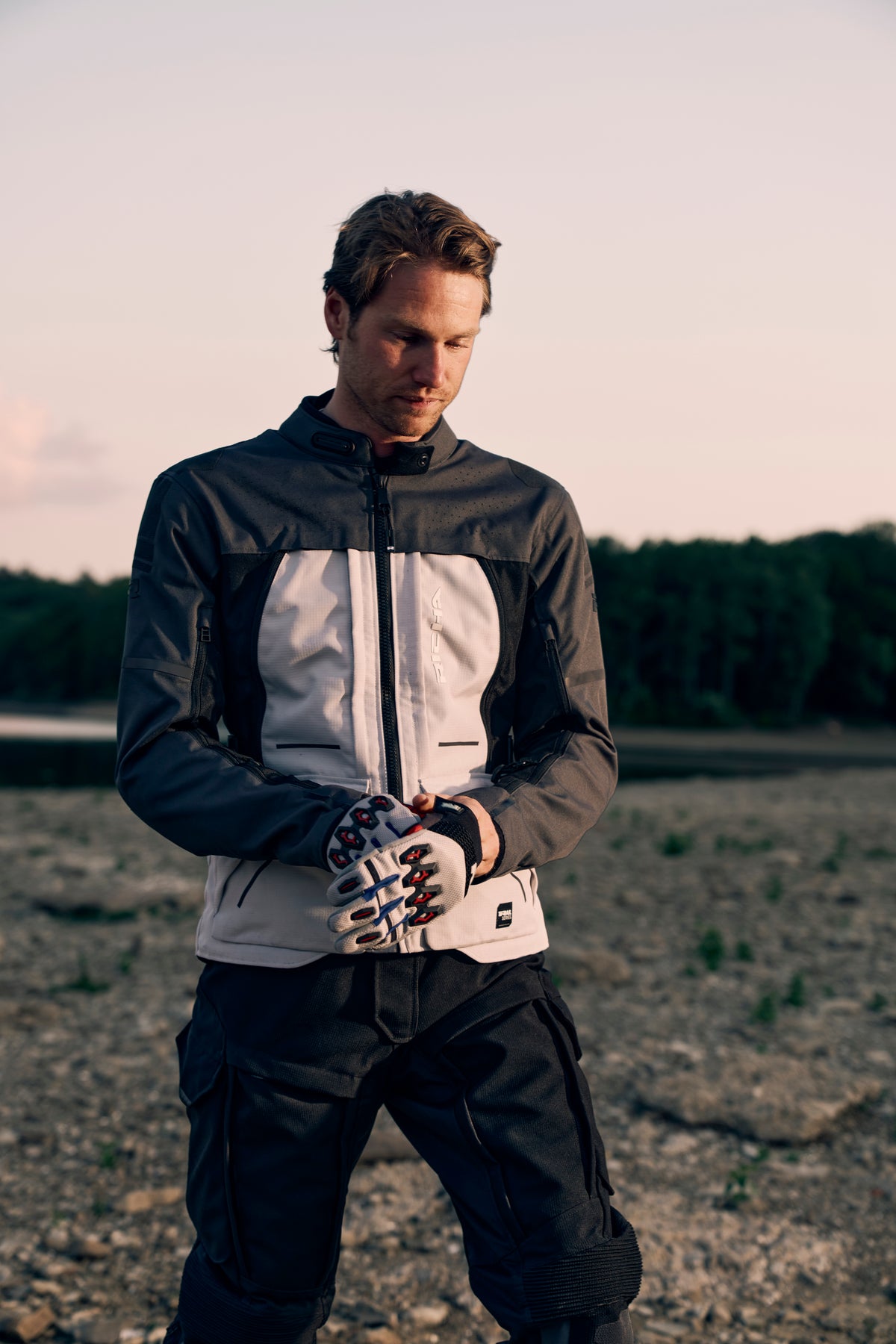
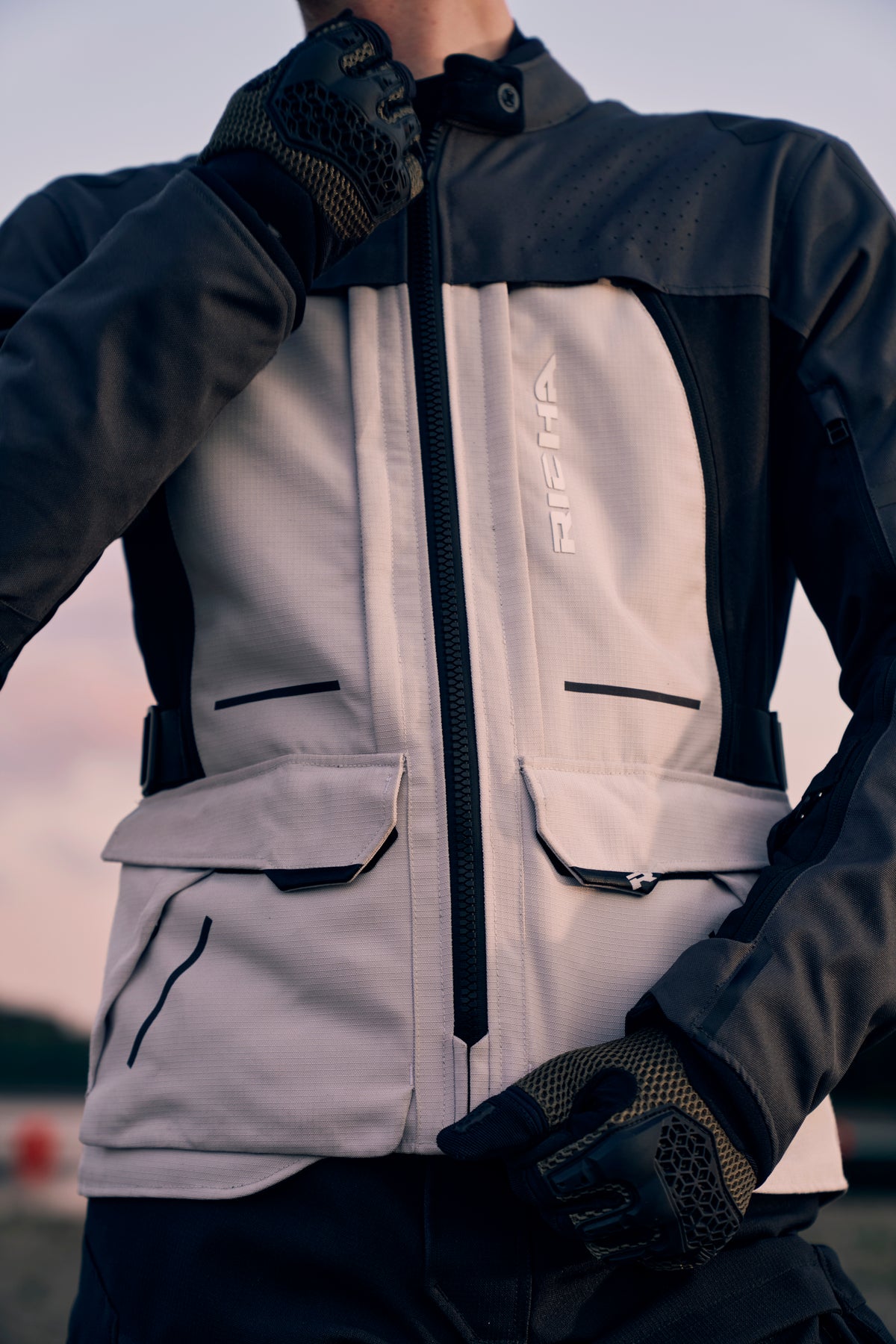
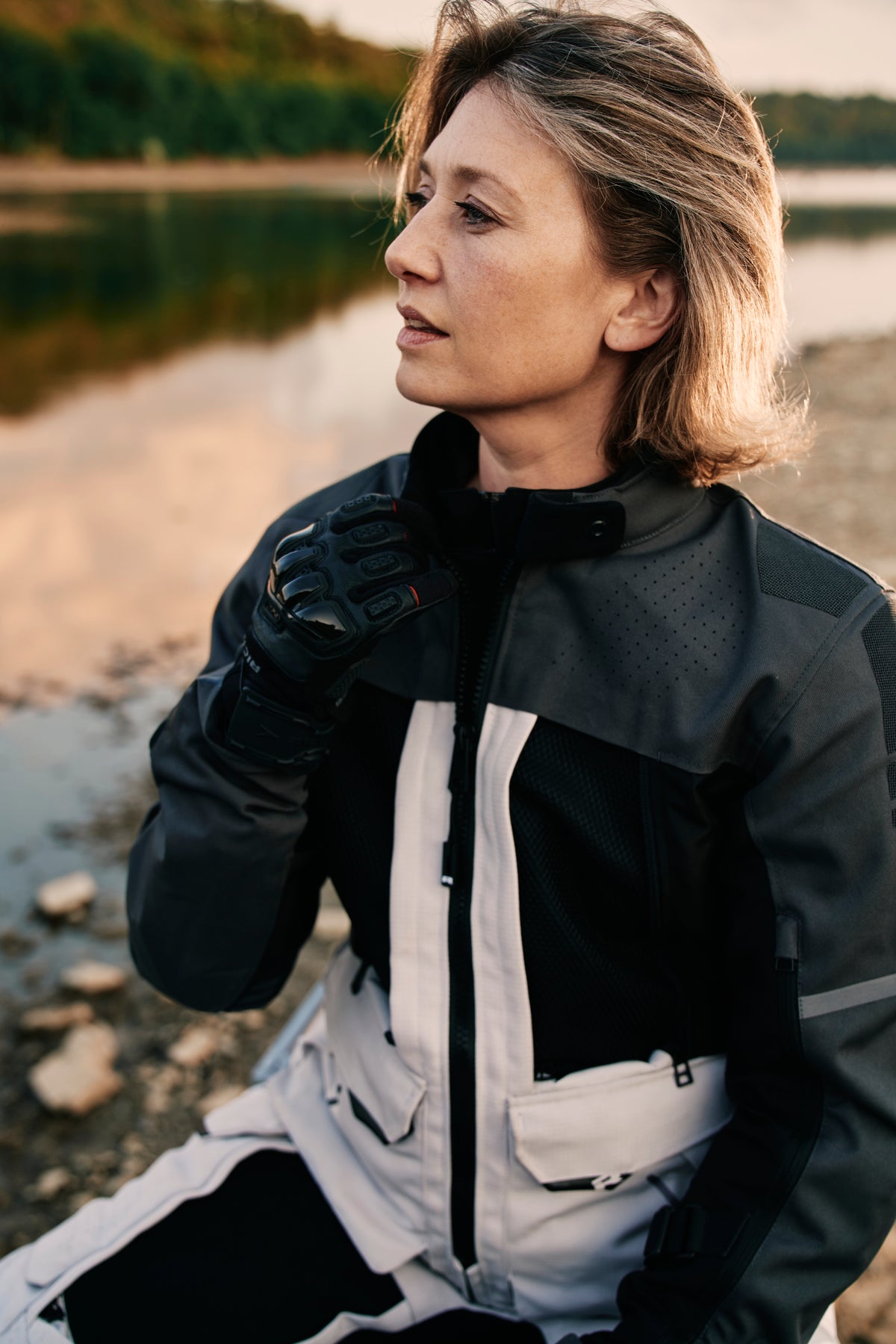
For example, the RICHA Phantom 3 Jacket includes adjustment points around the waist and upper arms, allowing riders to fine-tune the fit after selecting the appropriate size.
Try adjusting these areas while wearing your normal riding layers.
The goal isn't to tighten everything as much as possible. It's to reduce unnecessary movement without restricting circulation or flexibility.
Remember that adjustment straps can fine-tune a good fit, but they cannot correct a fundamentally incorrect size.
5. Consider What You'll Wear Underneath
Your jacket may fit beautifully over a T-shirt but feel completely different over thermal riding layers.
That doesn't necessarily mean you need a larger jacket.
The key is choosing a size that accommodates the clothing you realistically intend to wear.
If you regularly ride in changing conditions, consider a jacket designed for seasonal versatility.
A touring jacket such as the RICHA Orion GTX, with its removable thermal lining and adjustable sleeve openings, illustrates how riding apparel can accommodate different weather conditions.
When trying on a jacket, test it with the layers you're most likely to use.
Avoid purchasing excessive extra space for clothing you'll rarely wear.
6. Don't Assume Your Usual Size Is Correct
Perhaps the most important lesson is that motorcycle jacket sizing isn't universal.
A large in one brand may fit differently from a large in another. Even jackets from the same manufacturer can have different cuts depending on their intended riding style.
Sport-oriented jackets often have a closer fit and more pronounced pre-curved sleeves. Touring jackets may offer additional room and adjustment.
Before purchasing, take accurate body measurements and compare them with the specific manufacturer's sizing information.
Pay attention to chest circumference, waist, sleeve length, and the jacket's intended fit.
Most importantly, don't rely exclusively on the size printed inside your current jacket.
The Final Test: Move Like You Ride
Once you've completed these checks, spend a few minutes moving naturally in your jacket.
Reach forward, turn the handlebars, look over your shoulders, and simulate your normal riding movements while the motorcycle is stationary.
The jacket should move with you rather than against you.
If the armor stays positioned, the sleeves cover your wrists appropriately, and the jacket remains comfortable without excessive movement, you're likely much closer to the correct fit.
The best motorcycle jacket isn't simply the one that looks right. It's the one that fits properly when you're doing what it was designed for—riding.